

WEDDING GROUP PHOTOS
- HOW TO GET THEM RIGHT

Although my approach is rooted in documentary wedding photography, almost every couple I work with wants at least a handful of group or family shots — and I think that's entirely right. These are the images that end up on walls and in albums, the ones grandparents ask for and siblings fight over. Done well, they don't have to feel stiff or time-consuming. Done badly, they can eat into the best part of your reception. Here's everything I'd want you to know before your wedding day.
HOW MANY GROUP PHOTOS SHOULD YOU HAVE?
I recommend a maximum of eight combinations, with no more than around eight people in each group. That might sound restrictive, but it's genuinely enough to cover the key relationships — both sets of parents, the wedding party, siblings, close family — without the process starting to feel like a military operation. Eight groups, done efficiently, takes around twenty minutes. Much more than that and guests start drifting, drinks go warm, and the energy of the reception begins to flatten.
The temptation is always to add one more group. Try to resist it.
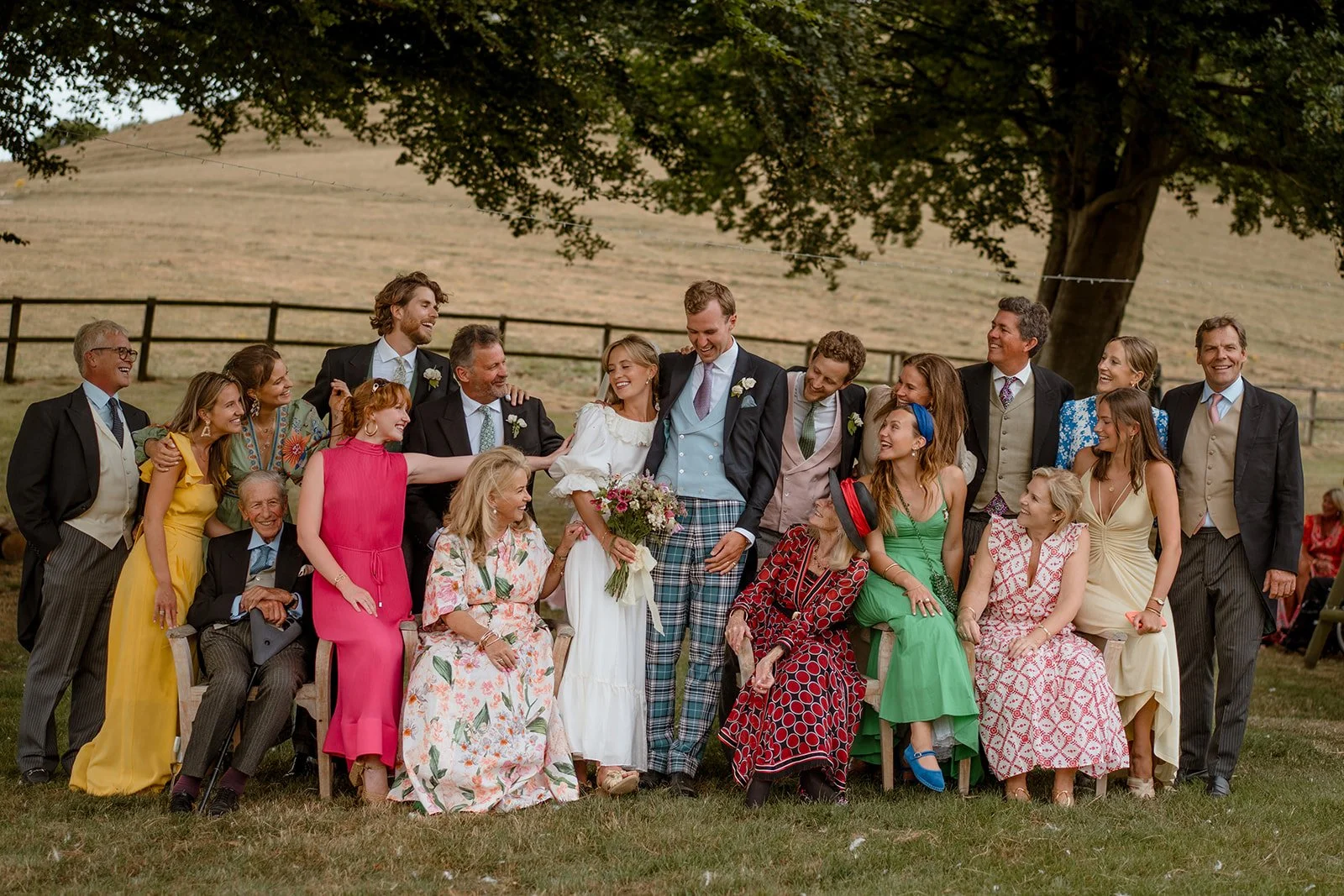
WHEN TO DO GROUP PHOTOS AT A WEDDING?
Timing matters more than most couples realise. My strong preference is to do group shots as early as possible — ideally as soon as guests have a drink in hand after the ceremony, while energy is still high and everyone is naturally gathered in one place. Leaving them until later means people have scattered, some will have had a few drinks, and corralling thirty relatives across a venue becomes considerably harder.
If your schedule allows, some combinations can be done before the ceremony — groom and groomsmen at the church, bridesmaids and bride before leaving for the venue. Getting these out of the way early frees up the post-ceremony time for the more relaxed, candid moments that I find make the most compelling images.

TIPS FOR MAKING GROUP PHOTOS WORK WELL.
A little preparation goes a long way. These are the things that make the biggest difference:
Give your photographer a list in advance. Write down exactly which combinations you want, in order of priority, so nothing gets forgotten and time isn't wasted deciding on the day.
Nominate someone to help corral people. Ideally an usher with a loud voice and a good knowledge of the family. This single thing will save more time than anything else.
Don't try to fit too many people into one shot. A long line of fifteen people rarely makes a great photograph. Smaller, closer groups are easier to light, easier to compose, and feel warmer.
Keep the location close to the reception. Moving guests any significant distance between ceremony and drinks is disruptive. The best location is one that's beautiful, well-lit, and no more than a minute's walk from where people already are.
Think carefully about a full group shot. If guests can naturally gather in one space and there's a good vantage point, it can be a wonderful image. If it means relocating two hundred people from one area to another, it's rarely worth the disruption to your reception and the candid moments you'd otherwise have.
Don't force anyone to participate. Some people genuinely don't want to be photographed, and it will show. Let them be.
Have a backup location in mind. Light changes, showers arrive unexpectedly, and sometimes the spot you planned simply doesn't work on the day. A second option means the process keeps moving.
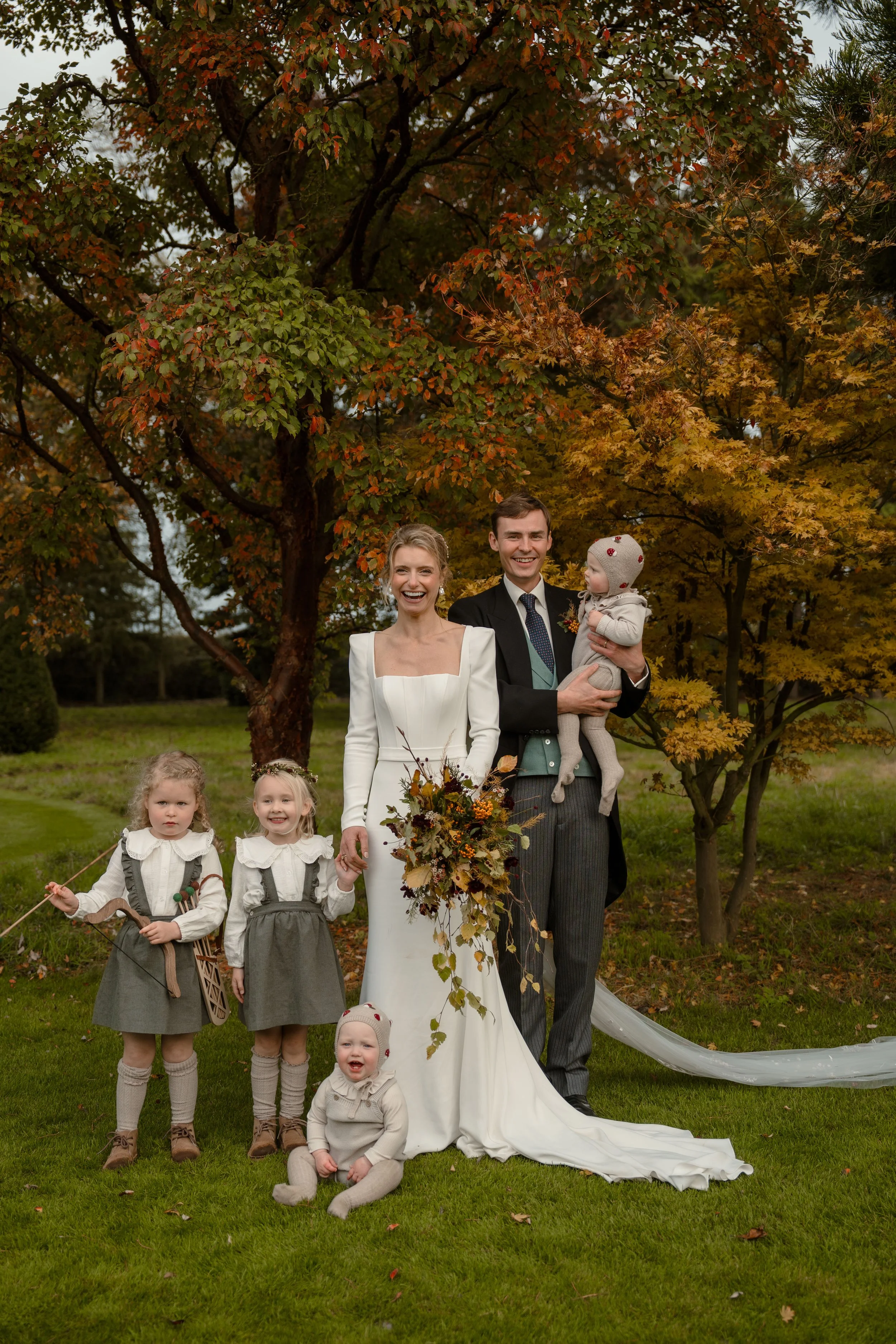
WHEN GROUP SHOTS BECOME SOMETHING MORE.
Occasionally a couple wants to take the group photography further — and that can produce really special results. For a wedding at Lismore Castle in Ireland, the bride sent me Annie Leibovitz photographs as inspiration and asked for something much more considered and dramatic. We used studio lighting and a lighting assistant, shot before the ceremony, and created something genuinely distinctive. It's not my default approach, but when a couple knows what they want and plans for it properly, the results can be extraordinary. If you have a specific vision for your group shots, tell me early — the more lead time I have, the more we can achieve.
You can view the full wedding from Lismore Castle here.
My top tips for getting the most out of your wedding group photos:
Keep the list short. Eight combinations is genuinely enough — and I can get through eight groups in around twenty minutes, leaving the rest of your drinks reception exactly as it should be.
Keep the groups tight. Smaller groups make better photographs. A long line of fifteen people is hard to light, hard to compose, and tends to feel impersonal. Closer groups, well placed, always work better.
Send me a list in advance. Write down your combinations beforehand and share them with me before the day. It means nothing gets forgotten, and no time is lost deciding who goes where when everyone just wants to be celebrating.
Have someone to help gather people. An usher who knows the family and isn't afraid to use their voice is worth their weight in gold at this point in the day. It makes everything move faster and with far less stress.
Do some before the ceremony if you can. Groom and groomsmen at the church, bridesmaids and bride before leaving the house — getting these done early frees up the post-ceremony time considerably.
Get them done early. As soon as guests have a drink in hand is the sweet spot — everyone is still gathered, energy is high, and people haven't yet scattered across the venue.
Stay close to the reception. The ideal location is beautiful, well-lit, and no more than a minute's walk from where people already are. Moving guests any real distance is disruptive and eats into the time I'd otherwise use for candid coverage.
Have a backup location in mind. Light shifts, showers arrive, and sometimes the spot you planned simply doesn't work on the day. A second option keeps things moving without the stress.
Be relaxed about timings. Sometimes it means waiting for a cloud to pass or moving into shade on a very bright day to avoid harsh shadows. A little flexibility on the day always produces better results.
Think carefully about a full group shot. If guests are naturally gathered and there's a good vantage point, it can be a wonderful image. If it means relocating two hundred people from one area to another, it's rarely worth the disruption — to your guests or to the candid moments happening all around you.
Never force anyone to be in a photo. Some people genuinely don't want to be photographed. It will show, and it's not worth it.
You can see examples of group photography throughout my wedding portfolio and in wedding stories in my journal. You can read more wedding planning advice here.

Some recent weddings:
Frequently Asked Questions
-
I recommend no more than eight combinations with up to eight people in each. This covers all the key family and wedding party groupings and takes around twenty minutes — leaving the rest of your drinks reception free for the relaxed, candid coverage that tells the real story of your day.
-
As early as possible after the ceremony, while guests are naturally gathered and energy is high. Some combinations — groom with groomsmen, bride with bridesmaids — can also be done before the ceremony to save time afterwards.
-
Yes, always. A clear list of combinations, shared in advance, means nothing gets missed and no time is lost deciding on the day. Include them in order of priority in case time runs short.
-
I love working with couples who have a clear vision. Whether that's a particular location, a specific aesthetic, or something more elaborately lit and staged, the key is giving me enough notice to plan properly. Get in touch and let's talk through what you have in mind.
-
Not if they're planned well. Eight groups in good light, with someone helping to gather people, takes around twenty minutes. The variables that eat into time are indecision, people wandering off, and locations that are too far from the reception. All of these are avoidable with a little preparation.